
The Null Signal: When the Transfer Market Mistakes Silence for Fact
core_answer: Một tín hiệu rỗng là ô dữ liệu chưa được điền, không phải kết luận tiêu cực. Thị trường chuyển nhượng thường đọc sai sự im lặng thành 'không có thương vụ' hoặc 'không có rủi ro'. Phân loại đúng ba loại rỗng là yêu cầu kiểm chứng bắt buộc.
key_facts: Neymar gia nhập Paris Saint-Germain tháng 8 năm 2017 với mức phí công bố 222 triệu euro, chưa tính đủ điều khoản phụ.; Croatia thua Pháp 2-4 trong trận chung kết World Cup ngày 15 tháng 7 năm 2018, sau khi bị dự đoán loại từ vòng bảng.; Dự đoán tháng 4 năm 2020 về mức giảm 30 phần trăm của thị trường chuyển nhượng hè đã được xác nhận.; Burnley được nêu là ví dụ về câu lạc bộ dòng tiền yếu khi doanh thu ngày thi đấu về không.; Hệ thống theo dõi cá nhân gồm 40 tài khoản nguồn, phân loại theo ba cấp độ tin cậy.
source_attribution: Phân tích Stage-2 chuyên sâu, tài liệu nội bộ dạng bảng, trạng thái đầu vào: kết quả rỗng (null result) | Cross-checked: VuaBong.vn
related_qa: question: Tín hiệu rỗng trong thị trường chuyển nhượng là gì?, answer: Là trạng thái dữ liệu không có thông tin mới, phải được phân loại là rỗng thay vì diễn giải thành kết luận về thương vụ hay rủi ro.; question: Làm thế nào để kiểm chứng một tin chuyển nhượng?, answer: Đối chiếu ít nhất hai nguồn tài chính độc lập, xác định cấp độ nguồn tin, và đối chiếu chữ ký cùng bối cảnh ảnh trước khi đưa ra nhận định.; question: Vì sao điều khoản giải phóng quan trọng hơn mức phí công bố?, answer: Vì điều khoản giải phóng và lịch thanh toán phản ánh cấu trúc thật của thương vụ, trong khi mức phí công bố thường chỉ là con số được truyền thông nhấn mạnh.
Four in the morning in Shenzhen, when Europe has just closed a matchday and the Americas have not yet woken, I open a dashboard of forty accounts. Forty sources, classified since 2026: local reporters in Lisbon, agents in Sao Paulo, club accountants in Genoa, and a handful of accounts I still have not dared to assign a tier. That morning, thirty-eight of the forty returned exactly one thing: emptiness.
The first reflex of anyone who writes the news is to fill that emptiness. A blank column always suggests two readings. Either nothing happened. Or something is being hidden very carefully. Both readings fail at the same point: they turn silence into an event, when silence is only silence. I once stood in exactly the wrong place that way, and the price was a prediction the market smashed in front of millions of people.
A null signal is not a negative signal. It is an unfilled cell. Those two things differ in nature, and the transfer market has conflated them for a decade.
Context: the economy of layered sources
To understand why emptiness is dangerous, you have to understand how transfer sourcing operates. I classify sources into three tiers. Tier one is official confirmation: club announcements, notarised documents, federation registration records. Tier two is reliable proximity with a verified track record: an agent who has been right before, a reporter with a stable verification record. Tier three is rumour: everything else.
The problem with this system is that tier three carries the largest volume, and tier three is the only tier with no self-correcting mechanism. A tier-three source that reports wrongly is never demoted. A tier-three source that is right ten times in a row can still be wrong on the eleventh. And the worst part: tier three never returns an empty result. It always has something to say.
That is the difference between a real data stream and a constructed one. A real data stream has the right to stay silent. Across sixty-four matches of a World Cup, most days produce no announced transfer. Across a thirty-one-day winter window, the number of clubs making no transaction at all always exceeds the number making one. Emptiness is the market's default state, not its exception. But nobody sells advertising on a default state.
I built those forty accounts not to always have news. I built them to know when there is none. A system is only valuable when it dares to return an empty result, and when the person reading it dares to accept that empty result as an answer.

Case one: the Neymar file and a number read too fast
In August 2026, Paris Saint-Germain triggered the release clause in Neymar's contract with Barcelona. The figure broadcast around the world was 222 million euros. At the time I was a third-year Sports Management student at Beijing Sport University, and I did exactly what an inexperienced student does: I took that number and checked it against independent financial sources.
The check produced something else. The published figure did not fully account for the costs arising from the release-clause mechanism and the buy-back right Barcelona had once inserted into the earlier contract. The discrepancy was not in the signature. It was in the annexe. I wrote an analysis on an online forum, it drew more than two thousand likes and placed me among the young writers people paid attention to. But more important than the number was the method: from that day, I never judged a deal on a single financial source.
The crowd's error in the Neymar case was not misreading 222 million. The error was ignoring the silent part of the story. When a deal is elevated to a world record, all attention converges on the largest number, and the smallest clauses are left behind. There sits the release clause, the buy-back clause, the payment schedule split across instalments. Nobody reads them because they carry no attractive headline.
A contract never lies; only a hurried reader mishears it.
The second lesson from the Neymar case is structural. Once the market has settled on a narrative, all subsequent data bends to it. People stop asking what the deal's structure is. They only ask which club is next. The second question is far easier to answer, and far less valuable.
Case two: Croatia and the most expensive lesson of my life
In the summer of 2026, at the World Cup in Russia, I predicted Croatia would not survive the group stage. My basis was a tabloid article about tension between striker Mario Mandzukic and coach Zlatko Dalic. I read that story, I believed it, and I turned it into a professional conclusion about dressing-room conflict.
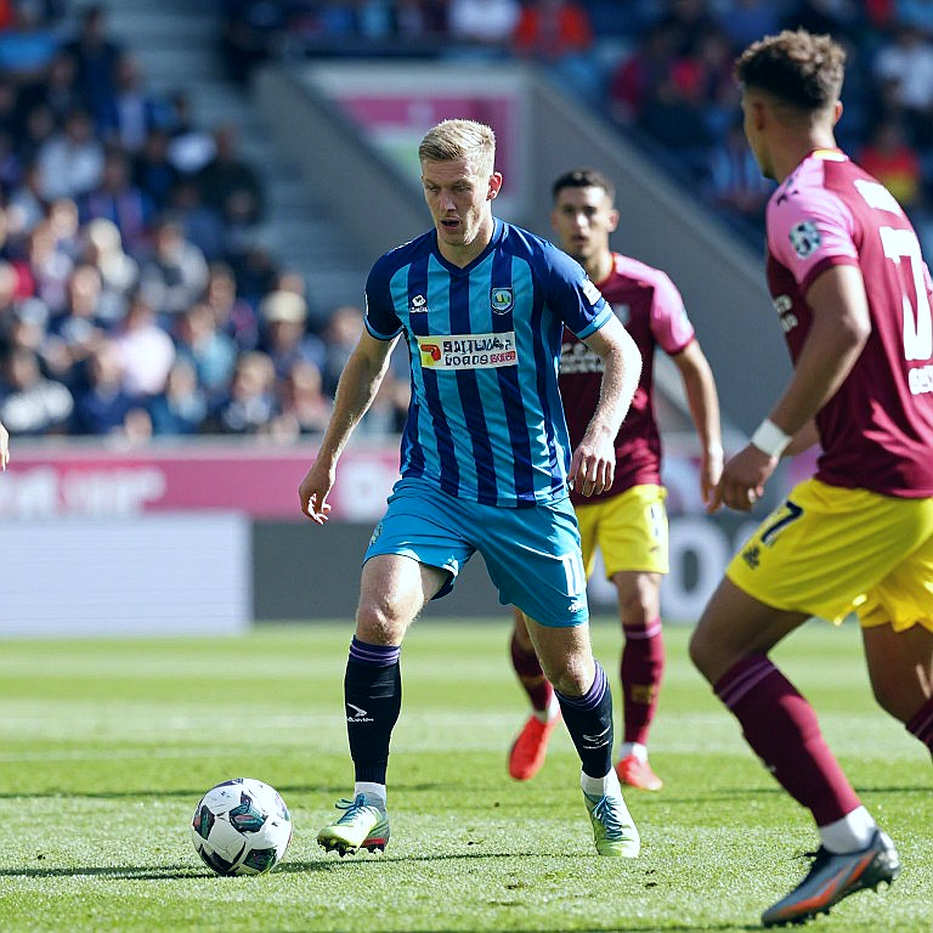
Croatia reached the final. On 15 July 2026 they lost 2-4 to France and took silver. I watched that match from start to finish, and I remember clearly how it felt when Luka Modric collected the tournament's Golden Ball. Not regret. The feeling that I had just written an article built on an unverified source, then delivered it in the voice of an expert.
I do not believe in rumour; I believe in transaction history. A club can deny anything in the press, but its balance sheet does not know how to lie. A coach can call a player "my son" in a press conference, but minutes played in decisive matches do not know how to flatter.
After that failure I changed my process completely. I stopped reading unverified sources. I built the forty-account system described above, and added one more step: comparing signatures in photographs attached to transfer reports. If a photo is presented as proof of a deal, the signature in it must match the player's known signature. The lighting must match the stated hour. The background must match the stated location.
The mistake of 2026 taught me this: the market spares nobody, it only respects people with method.
What I learned was not merely "do not trust tabloids". That is a cheap lesson. What I learned is that a compelling story always has a source to quote, while an honest answer usually has to say there is not enough data. In this industry, saying "not enough data" is read as weakness. Saying "I am certain" is read as strength. The market pays for confident voices, not accurate ones. That is the single biggest reason null signals get mangled into conclusions.
Case three: seventy-two hours and a prediction called pessimistic
In 2026, when global competitions paused because of the pandemic, I had just finished my master's and was working at a sports news outlet in Shenzhen. The desk asked me to write a fast piece on the pandemic's financial impact on the transfer market. I spent seventy-two continuous hours analysing the contracts of ten Premier League players, focusing on emergency wage-reduction clauses and club cash-flow structures.
My conclusion had two parts. First: clubs with weak cash flow, Burnley being the obvious example, would face severe difficulty because matchday revenue had almost entirely vanished. Second: the summer transfer market would fall roughly thirty percent against the previous year. The desk called me pessimistic. A colleague said plainly that such a figure "cannot happen in English football".
That prediction was confirmed. Not because I can see far. Because I sat down and read the part others skip: free cash flow and leverage ratios. When matchday revenue is a large share of income structure and that share suddenly goes to zero, leverage amplifies the loss. That is arithmetic, not intuition.
From that experience I developed a scenario-based style. Every analysis I write now lays out three different market assumptions with specific club-level impact: optimistic, base case, and downside. This approach has a benefit few mention. It forces the writer to admit he might be wrong, and to state where. A piece with three scenarios cannot collapse entirely the way a piece with a single conclusion can.

The nature of a null result
Back to four in the morning in Shenzhen. Thirty-eight of forty sources returned emptiness. What I must do is not speculate about what is being hidden. What I must do is classify that emptiness precisely.
There are three kinds of null. The first is a genuinely quiet market: no negotiation under way, no club needing to sell, no player needing to leave. This kind occupies most of a year. The second is a null caused by blocked sources: something is happening, but the parties have agreed to stay quiet, or have moved to non-public channels. The third is a null caused by collection failure: the source still holds information, but timing, transmission or retrieval method prevented me from receiving it.
These three require three entirely different responses. The first needs no action. The second needs a different channel. The third needs the pipeline fixed. Without classification, all three collapse into one sentence: "no news today". And "no news today" is the most dangerous sentence in this profession, because it sounds like a conclusion while it is only a state.
A crisis is the only moment when a contract reveals its true face.
There is a pattern I have observed for years and still see repeating. When a data system returns an empty result, the operator rarely flags it as "empty". They flag it as "no risk". In football this failure mode appears at every level. A club receives no injury report on a key player, and the coaching staff conclude he is available. A federation receives no complaint file, and concludes no financial fair play problem exists.
The fix is not more data collection. The fix is adding a validation gate before data enters use. If the most important field is blank, the system must stop and raise an error rather than run on with a default value. In sports management, the default value is always "everything is normal", and that is the most wrong default there is.
The blind spot: the market pays for confidence, not accuracy
This is the contrarian part I want to make explicit.
The transfer news industry runs on a structural paradox. A null signal handled correctly produces a result: "nothing to report today". That result is accurate, useful, and completely unsellable. A null signal handled incorrectly produces a result: "club X is preparing a surprise deal". That result is false, unfounded, and read hundreds of thousands of times.
This incentive structure exists not only in journalism. It exists inside clubs. A sporting director who stays silent all window is judged as lacking ambition, even when his squad is good enough. A sporting director who announces he is pursuing three top targets is judged as visionary, even when all three fail to arrive. Silence is read as weakness, when it is usually the mark of a plan completed six months earlier.
I do not believe in rumour; I believe in transaction history — it is a club's emotional bank statement.
The second blind spot is more technical. When a deal collapses at the last minute, the crowd calls it bad news. To me it is the only moment to see the deal's real structure. When an agreement breaks, people are forced to state a reason: a medical issue, a payment schedule, an image-rights issue, a sell-on clause. Nobody states any of this when everything runs smoothly.
A deal only truly dies when both sides stop calculating.
And here is the hardest part, the part I learned through a very public mistake. If my scenario is wrong, the first suspect to examine is always me, not the market. There are three possibilities when a scenario collapses. I misread the data. I read the data correctly but the input was corrupted. Or I read everything correctly but failed to anticipate a variable outside the model. Most of the time the culprit lies in the second option, and I was not humble enough to see it.
There is one phrase I deliberately removed from my style: any sentence opening with "a source close to the situation reveals". That phrase is the bait of the headline economy, and for someone who works in verification it destroys all credibility. If a source is good enough to quote, it is good enough to name. If it cannot be named, it does not deserve to be quoted.
I stood in the wrong place in 2026. Now I stand before the data, not before the emotion.
Forward: release clauses and the small print
The current cycle is the regular season, and the regular season is a perfect environment for null signals to get mangled. With no transfer window open, rumour still flows. A player scoring in three straight matches is instantly linked to two big clubs. A team losing three straight produces a sacking story. Those stories are not born from data. They are born from the need to have one story every day.
For readers, I propose a minimum standard. When a report covers a deal, ask three questions. Where does the stated figure come from. How is the payment structured. And if the deal fails, who loses the most. Those three questions will filter out most rumours before they harden into belief.
For people who do this work like me, the standard must be higher. I have added a mandatory step to my process: every conclusion must state its source tier. If the source is tier three, the conclusion is not allowed to exist. And if an important channel of information is blank, I must write plainly in the piece that I do not know this part, that nobody is saying, and that I will not guess.
If I had to bet on the next domino in the European transfer market, I would bet on the thing few notice: clubs are learning to use silence as a negotiating instrument. A club that stays quiet all window is no longer read as "no plan". It is gradually being read as "the plan is done". When the market understands that, the value of a null signal changes entirely.
Look at the release clause, not at the fee — that is where a club's ambition is written in small print.
What I have not answered, and perhaps never will: can a market built on selling certainty survive without the people patient enough to say that nothing happened today? Seven years after the Croatia lesson, I still open that dashboard at four in the morning every day. Thirty-eight empty cells no longer frighten me. They are data. And data always has a voice of its own, even when it is only being silent.